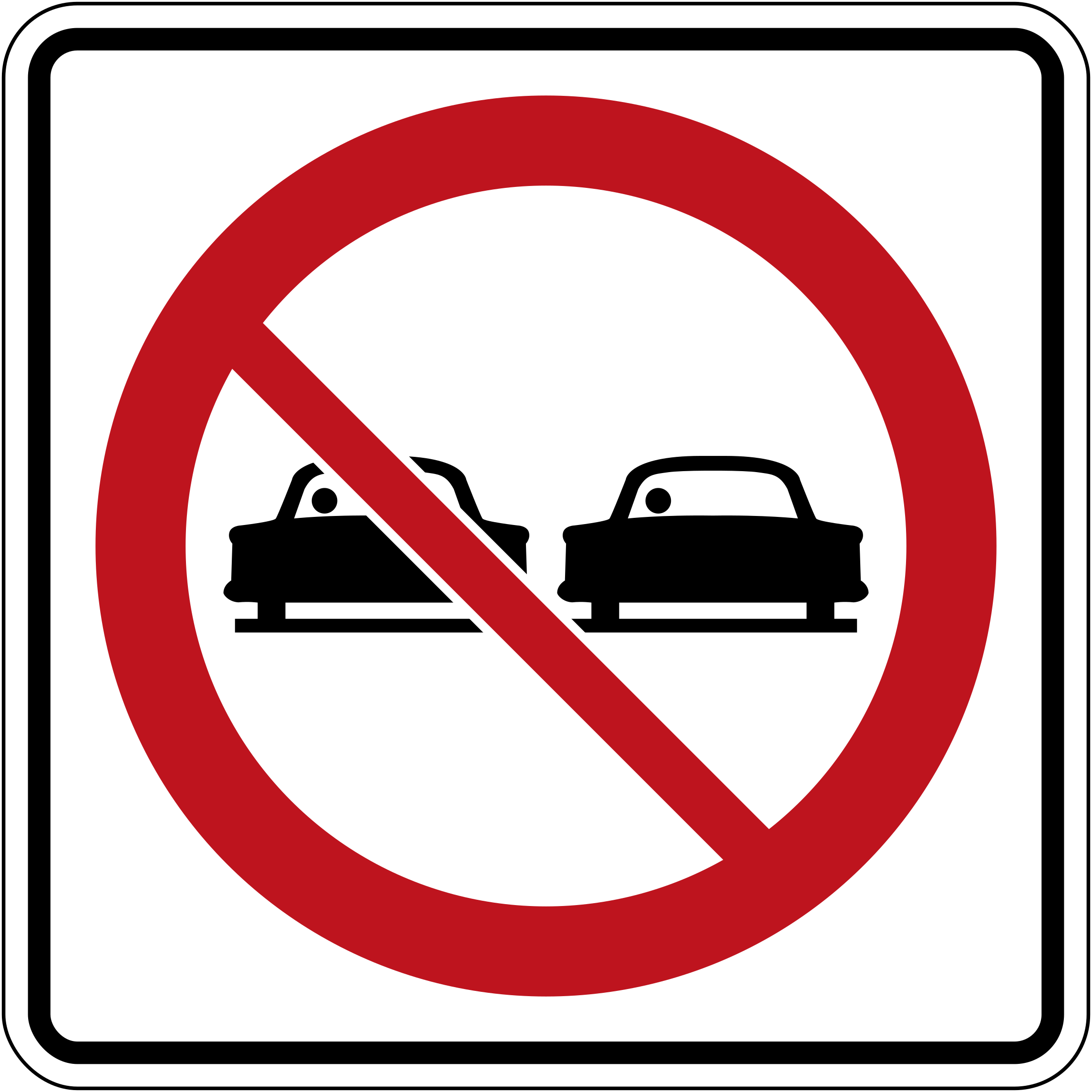
Do not pass
Official Ontario sign code: Rb-31
What this sign means
Do not pass is an official Ontario regulatory sign. Regulatory signs tell drivers what they must do, what they must not do, or which lane and movement rules apply. It is listed with Ontario code Rb-31.
What to do
Obey the instruction before you enter the intersection, lane, parking area, or restricted zone shown by the sign. Treat it as an instruction, not a suggestion. Check the sign, apply the rule before you enter the controlled area, and keep watching for posted times or lane details.
G1 study tip
For the G1 test, regulatory signs are usually about what action is legally required or prohibited. On the G1 test, expect the correct answer to focus on the rule the driver must obey.
Sign images are sourced from the Official MTO Driver's Handbook under the Open Government Licence, Ontario, or from Wikimedia Commons public domain files with Ontario sign-code source matching. The fire route example uses an official Ontario municipal source.
How to Recognize and Use This Sign
Use these study notes to connect the sign image with the action expected on Ontario roads and on the G1 test.
Where you will see it
You usually see it at intersections, lane entries, parking areas, school zones, reserved lanes, or other places where a legal driving rule starts. For Do not pass, look at the sign shape, symbol, text, and any posted times or lane arrows before deciding what to do.
Common mistake
A common mistake is treating the sign as general advice instead of a required rule. For Do not pass, the safe answer is usually the one that obeys the posted sign early and leaves room for other road users.
Example on the road
If you are approaching a busy intersection and see this sign before the stop line, decide your lane position and legal movement before you enter the intersection. Use the Do not pass sign as the main clue for what the examiner expects you to recognize.
Memory cue
Regulatory signs are the rule signs. First ask what the sign requires or prohibits. For Do not pass, connect the visual symbol to the driver action before reading the answer choices.
Do not pass FAQs
What does the Do not pass sign mean in Ontario?
Do not pass is an official Ontario road sign. The key idea is: Do not pass is an official Ontario regulatory sign. Regulatory signs tell drivers what they must do, what they must not do, or which lane and movement rules apply.
What should I remember about Do not pass for the G1 test?
For the G1 test, regulatory signs are usually about what action is legally required or prohibited. Also remember the practical driver response: Obey the instruction before you enter the intersection, lane, parking area, or restricted zone shown by the sign.
Practice every sign with a real instructor.
Book a lesson with SafePass and learn every Ontario road sign on the road, not just in a study guide.